
How to Export Fruits from India to Dubai – Complete Guide (2026)
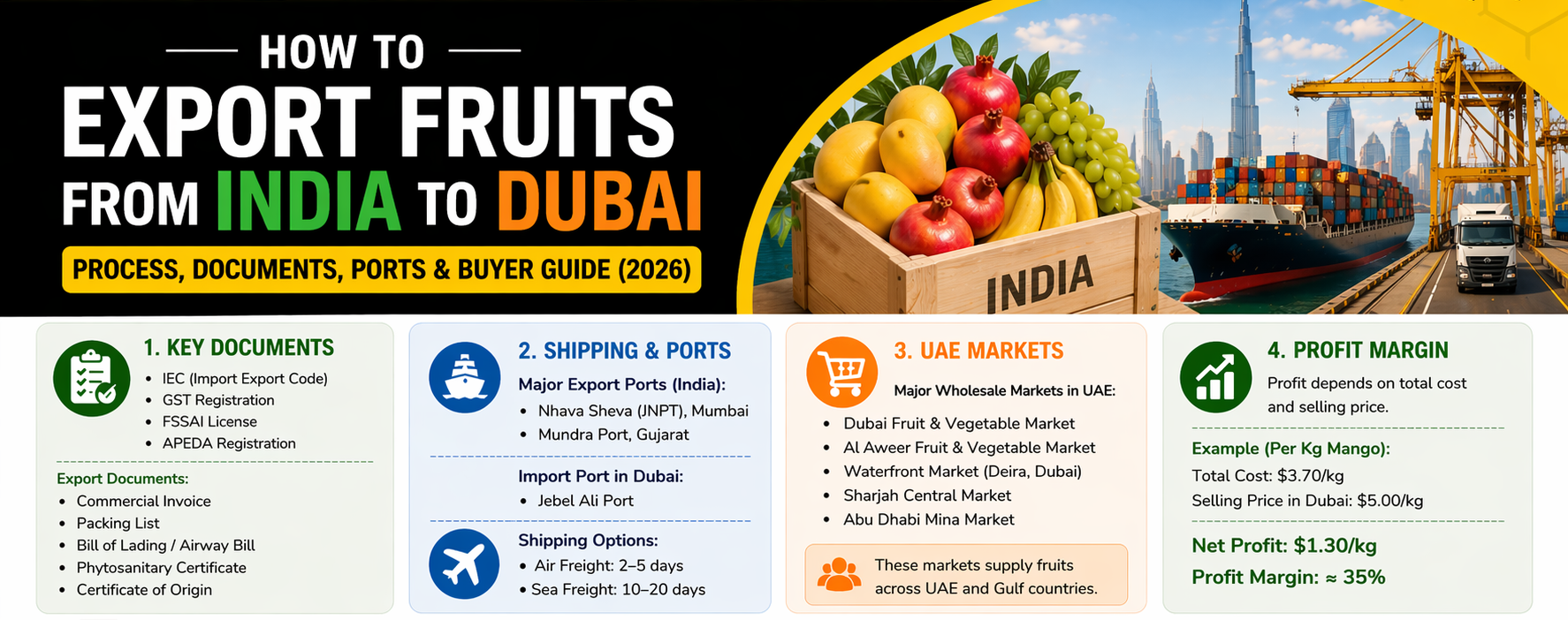
How to Export Fruits from India to Dubai – Complete Guide (2026)
Exporting fruits from India to Dubai is one of the most practical and profitable ways to enter the international trade business today. Over the last few years, the demand for fresh fruits in the UAE has increased rapidly due to population growth, tourism, and the expansion of supermarkets and hotel chains.
From a business perspective, Dubai is one of the easiest global markets for Indian exporters. The logistics are fast, trade regulations are relatively smooth, and most importantly, Indian fruits already have a strong reputation in the UAE. Products like mangoes, pomegranates, bananas, and grapes are widely accepted and trusted by buyers.
Another major advantage is that Dubai is not just a consumption market—it also acts as a re-export hub for other Gulf countries like Saudi Arabia, Oman, and Qatar. This means when you export to Dubai, you are indirectly entering a much larger regional market.
If you focus on quality, proper documentation, and reliable buyers, fruit export from India to UAE can become a long-term and scalable business. Platforms like ExportBusinessMart.com also help Indian exporters connect globally.
🌍 Why Export Fruits from India to Dubai?
- Freshness and natural taste
- Competitive pricing
- Strong supply availability
- Faster shipping compared to other countries
Step 1: Choose the Right Fruits for Export
Step 2: Understand Export Pricing (FOB & CIF)
| Fruit | FOB Price (India) | CIF Price (Dubai) |
|---|---|---|
| Mango | $2.5 – $4 | $4 – $6 |
| Banana | $0.30 – $0.60 | $0.80 – $1.2 |
| Pomegranate | $1.5 – $2.5 | $2.5 – $3.5 |
| Grapes | $1.2 – $2 | $2 – $3 |
| Apple | $1 – $1.8 | $2 – $2.8 |
👉 Prices depend on season, quality, packaging, and shipping method.
Step 3: Business Setup & Required Documents
- Import Export Code (IEC)
- GST Registration
- FSSAI License
- APEDA Registration
Required Export Documents:
- Commercial Invoice
- Packing List
- Bill of Lading / Airway Bill
- Certificate of Origin
- Phytosanitary Certificate
Step 4: Maintain Quality & Packaging
- Proper grading and sorting
- Uniform size, color, and ripeness
- Damage-free fruits
- Strong export-quality packaging
Step 5: Shipping, Ports and Logistics
- Nhava Sheva (JNPT), Mumbai
- Mundra Port, Gujarat
Import Hub in Dubai:
- Jebel Ali Port
Shipping Options:
- Air Freight: 2–5 days (fast, costly)
- Sea Freight: 10–20 days (cheaper for bulk)
Step 6: Cold Chain Management
- Use temperature-controlled (reefer) containers
- Store products in cold storage
- Ensure proper ventilation
Step 7: Find Buyers in UAE Markets
- Dubai Fruit and Vegetable Market
- Al Aweer Fruit and Vegetable Market
- Waterfront Market Dubai
- Sharjah Central Market
- Abu Dhabi Mina Market
Step 8: Payment Methods
- Advance Payment
- Letter of Credit (LC) – safest for beginners
- Bank Transfer
Step 9: Profit Margin (Clearly Explained)
Formula: Profit Margin (%) = (Net Profit ÷ Total Cost) × 100
- Purchase Price: $2.00
- Packaging: $0.30
- Transport: $0.20
- Freight: $1.00
- Other Costs: $0.20
Total Cost = $3.70/kg
Selling Price = $5.00/kg
Net Profit = $1.30/kg
Profit Margin ≈ 35%
Typical Profit Range:
- Bulk (Sea Freight): 10% – 20%
- Standard Export: 20% – 30%
- Premium / Air Export: 30% – 50%+
Step 10: Challenges in Fruit Export
- Maintaining freshness
- Price fluctuations
- UAE import regulations
- Competition from other countries
FAQs
Q1. Is fruit export from India to Dubai profitable?
Yes, it can be very profitable if you maintain good quality and build strong relationships with buyers. Fruits like mangoes and pomegranates often give high margins, especially during peak season. However, profit also depends on logistics cost and wastage control.
Q2. What is the best way to ship fruits to Dubai?
If you are exporting small quantities or premium fruits, air freight is the best option because it is fast and maintains freshness. For bulk shipments, sea freight is more cost-effective, but you must use proper cold chain systems to avoid spoilage.
Q3. How can I find buyers in Dubai for fruits?
You can find buyers through wholesale markets like Al Aweer Market, B2B platforms such as ExportBusinessMart.com, trade fairs, and direct networking with importers. Visiting these markets or connecting with traders online is one of the most effective ways
Q4. What are the biggest challenges in fruit export?
The biggest challenges include maintaining freshness during transit, handling price fluctuations, meeting UAE import standards, and dealing with competition from other exporting countries.
Q5. Do I need certification?
Yes, you need certifications like FSSAI, APEDA registration, and a phytosanitary certificate. These ensure that your products meet international food safety standards.